Part 31 Contract Cost Principles and Procedures

It is also not appropriate for long term assets as the concept does not allow for upward revaluation of these assets, and they will never show actual market value in the long term. It makes asset values objective, and it is easier to report on than other methods. While the cost principle seems advantageous, it may not be every business’s best method. In fact, there are many accounting professionals that find the method to be controversial. This is due to a handful of significant disadvantages that come with the cost principle. On the other hand, the cost principle will always provide an asset’s value in a single figure.
- Overall, the Cost Principle serves as a fundamental concept that helps ensure consistency, comparability, and accuracy in financial reporting.
- In the job market, TANSTAAFL explains why unpleasant jobs tend to pay higher wages to compensate for their downsides, while enjoyable jobs pay less.
- In addition to this, there are some benefits to using the cost principle, as well.
- Critics argue that the cost principle fails to account for changes in the value of assets over time, and that it can lead to misleading financial statements.
- So, the cost is shifted and eventually paid by taxpayers or future budgets.
- For example, companies could be required to provide additional disclosures about the market value of their assets.
How is Cost Principle Applicable?

Johanna brings expertise in financial education and investing, helping readers understand complex financial concepts and terminology. With a passion for making finance accessible, she writes clear, actionable content that empowers individuals to make informed financial decisions. My Accounting Course is a world-class educational resource developed by experts to simplify accounting, finance, & investment analysis topics, so students and professionals can learn and propel their careers. Shaun Conrad is a Certified Public Accountant and CPA exam expert with a passion for teaching. After almost a decade of experience in public accounting, he created MyAccountingCourse.com to help people learn accounting & finance, pass the CPA exam, and start their career. Understanding Cash Management Effective cash management is crucial for any business, regardless…

205-18 Independent research and development and bid and proposal costs.
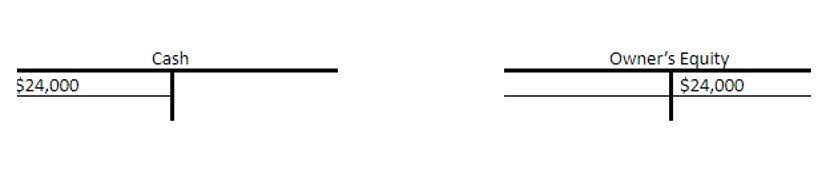
At the time of acquisition, the machine’s original cost was $100,000. Based on your business experience, you know that this machine can only work for the next ten years, and its value will be nil. So, initially, your fixed asset will get debited (increased by $100,000, and cash will get credited by $100,000. These exceptions exist to enhance the relevance and reliability of financial statements in reflecting an entity’s actual financial position.
The Benefits of Using the Cost Principle

By recording assets at their original cost, the principle provides a clear audit trail and facilitates the traceability of transactions. This transparency helps prevent manipulation https://mcchsl.org/affordable-online-bookkeeping-services-in-san-2/ or misrepresentation of financial information, contributing to the integrity of financial reporting practices. By applying the Cost Principle in the valuation of assets, the financial statements provide a reliable and verifiable representation of a company’s financial position.
- In some cases, we earn commissions when sales are made through our referrals.
- With a passion for making finance accessible, she writes clear, actionable content that empowers individuals to make informed financial decisions.
- The cost principle, also known as the historical cost principle, is an accounting convention that has been used for centuries to determine the value of assets and liabilities.
- Using the fair value method, costs and assets will continue to fluctuate as the market changes.
- Class deviations for the civilian agencies require advance approval of the Civilian Agency Acquisition Council.
- New content is added all the time, so be sure to check it frequently.
Without a fixed initial cost, balance sheets would be subject to continuous, subjective re-evaluations based on volatile market conditions. The cost principle ensures that every recorded value is tied directly to an actual, observable business event. The cost principle, also known as the historical cost principle, is a fundamental rule in United States Generally Accepted Accounting Principles (GAAP). This principle dictates the initial value at which assets, liabilities, and equity transactions are recorded on a company’s financial statements. It requires that these items Purchases Journal be entered at their original cash equivalent price at the time of the transaction.
- The useful life of the machine is limited to ten years, and its fair value depreciates annually.
- Some long-term assets that need to fall under the cost principle are heavy machinery and equipment.
- The FASB determined that the increased relevance of current market pricing for these liquid assets outweighs the verifiability benefit of historical cost.
- This is a great thing for any assets that may depreciate over time.
- This wear and tear happens over long periods of use, and causes the asset to lose value.
They aren’t used for any cost principle other purpose, like machinery or equipment is. All liquid assets are recorded on the balance sheet at their current market values. This means that over time, improvements in market value can be monitored and assessed. The Cost Principle, as a fundamental concept in accounting, plays a crucial role in financial reporting by requiring assets to be recorded at their original cost. It provides a reliable and objective basis for valuing assets and ensures consistency in financial statements.